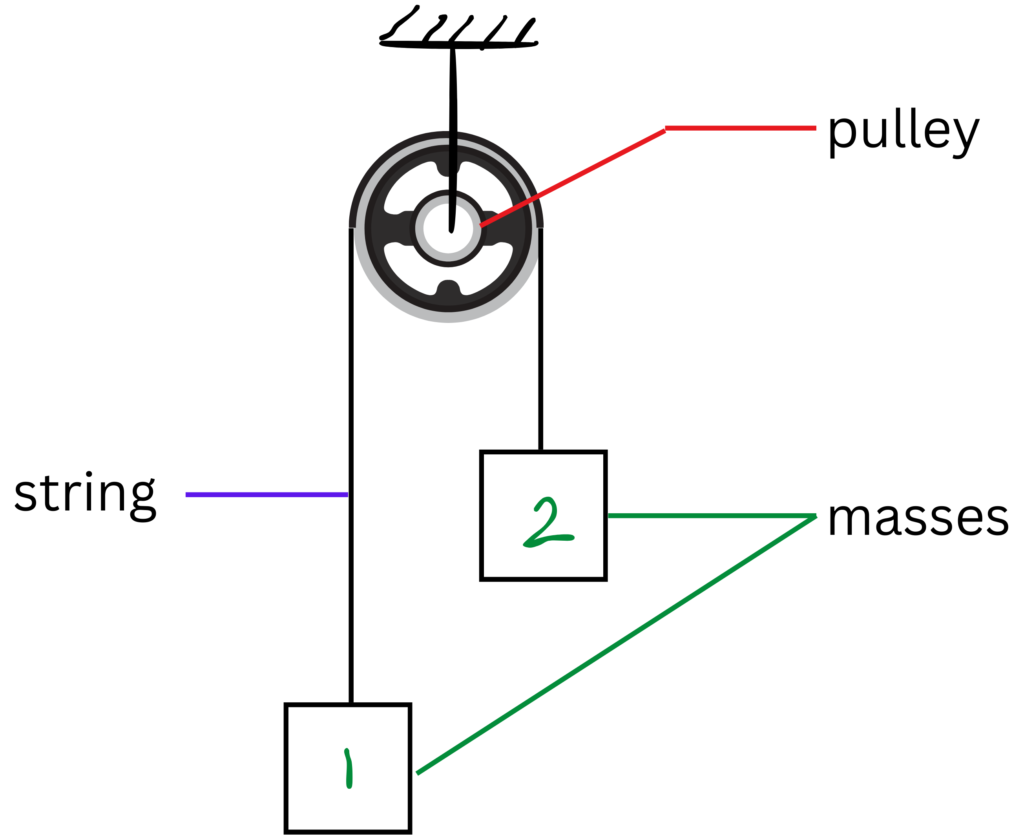
The problem is a kind of blend of physics and electronics which made this problem to fall in this section. The problem is multi-concept based. As a hint, the problem mixes up :
Kinematics
A bit of rotational motion
Electronics (Understanding of Resistor)
As a reference, you can use the attached article so that you are all covered to complete this problem : Click Here
The Problem Statement has been uploaded below in the form of PDF.
Here, we present the solution for Problem 6 : Conceptually Confused !
The solution tries to give a proper and a detailed insight of the 2 topics and also explains how the connection between the 2 topics has been made. It includes :
Concept of Fluids
Arduino (Microcontroller)
Pressure transducer & LDR (Light Dependent Resistor) working
LED
Efforts has been made to make the approach more understandable for beginners as well by adding flowcharts and diagrams to simplify the situation. Make sure that you have a look at them carefully. The solution is designed in a very lucid language !
Tip : If you haven’t yet explored about Arduino, Do explore and learn about it because, it is indeed very interesting !
Download the solution file by clicking here – DOWNLOAD
Three containers are kept on a horizontal surface. The dimensions of all the containers is given in Fig.1 . The base of each container is kept on a pressure sensor (PS). Each container is placed below a tap. All containers are symmetrical about the central axis. The whole setup is shown in Fig. 2
Pressure Sensor/ Pressure Transducer:
For this problem, we have chosen this sensor to measure the pressure at the base
Working:
More the pressure, more the value sent as output
Note : In reality, this is known as a force sensor
The pressure sensor is further, a part of the electric circuit shown. The circuit involves :
Microcontroller – Arduino
Pressure Sensor
LED
LDR
Multimeter as Ammeter
Hint : LDR stands for ‘Light’ Dependent Resistor
Note : Each container has a separate circuit (Fig.3) for itself attached
Arduino IDE code:
Hint : Understand the problem statement, the setup of the problem, the circuit and the code thoroughly. Note that, you just need to get the gist of what the code is trying to do!
Based on your understanding,
Answer the Question Parts shown below
Question Parts :
Part- (a)
The taps above respective containers are turned on and water is allowed to flow into the containers. The experimenter keeps a track of the height of the water column ‘h’ which gets accumulated in the containers w.r.t time and plots the graphs for the same as an observation. (Taps are not identical)*
Graphs are as follows :
Is there any time instant where the readings of the current values are same on atleast 2 ammeters? And if you find any, then find the volume of water filled in the 3 containers at that time instant.
Part-(b)
Part-(c)
Draw the simplified schematic circuit diagram and a flowchart which simplifies Fig.3
(Optional)
Conclusion :
Understand & draw the circuit. Try to understand the motive behind the code. Basically, there is a type of procedure/flow to approach this problem. Try to grab that flow.
As mentioned in the problem statement description, this problem is designed to connect both of these beautiful subjects : Chess and Physics. So, having a problem which needs just the basics of the subject was required.
So, from the physics side, we have Vectors – the basic concept in high school Physics while from chess side we need to learn just the Chess Notations.
In part 1 or (a),
We learn the procedure to calculate the displacement vector. This can be achieved by 2 methods – One is quite quick than the other. So I am just terming it as ‘Quick Method‘ while the second one is the ‘Polygon law of Vector Addition‘.
In part-2 or (b) :
We try to answer the question by changing the position of origins.
Overall, I see this as a ‘fun’ problem and not a very calculation intensive problem. So, just Chill and Solve the problem !!
I am attaching the solution file for the problem below
💎This problem is mainly designed to act as a ‘bridge’ 🌉 between physics students and chess players !!
What I mean by this is that , Physics people need to learn basic chess to solve this, while Chess players need to learn little physics to solve this problem.
Problem Statement :
Two friends decide to play an friendly match. Both of them sit for the match. The following game (given below) has been played on the chessboard by them. The square shaped chessboard has the length of ‘8L’.
Game Notations :
Getting frustrated from the piece loss, player with the Black pieces decides to resign the game and the result of the game is 1-0
Question Parts :
With reference to the game played, find out the displacement vector of the white’s g1 knight after the 7th move from white side has been completed. (Take the origin as the centre of the chessboard)
2. Does the position of origin matter in the answer of part 1 ?
Assumptions :
Assume the pieces to be point masses and are located at the center of respective squares
(Chess Notations can be observed from figure below)
This question is like an ultimate test of comprehension. The Key is to extract the necessary information from the question. This quality is very much essential for the competitive exams like JEE Advanced.
The Solution is divided into 2 parts : Part(a) solution & Part-(b) solution
In part (a), the explanation to the maximum effort chart is covered. Through this, the velocity-time graphs are explained and various topics like it’s behaviour, how to calculate displacement from v-t graph, etc has been covered.
In part (b), we try to predict the result of the game based on some time calculations. Also, we try to analyze the Last ball situation in detail
At the very end, we try to highlight the parts in the question which were important to be noted since that information had to be used while solving the problem. And also, not all information given in the question is relevant. Just pick the important ones and Ignore the Rest
Topics Covered :
velocity-time graphs (Kinematics)
Time taken by charge in magnetic field
Nature of the path covered by charged particle in magnetic field
Commentary: Oh! we are witnessing the most exciting final ever. Just look at the score board mate! The crowd is going crazyyy at the Wankhede stadium. For now, We are having some discussion going on between captain and umpires and seems like they have been given a new ball for the last ball of the match.
Fig. Scoreboard Situation
Commentary: Till the game resumes back, we show you the stats of the players as well as the info of the Wankhede stadium.
Striker :
Age : 26
Right handed batsman
Average : 25.5
Highest : 67(36)
Maximum effort chart: (‘v’ in m/s and ‘t’ in s)
– Nature of graph : Straight line
Fig. Maximum effort chart for Striker
Non – Striker :
Age : 27
Right handed batsman
Average : 23.2
Highest : 56(23)*
Maximum effort chart: (‘v’ in m/s and ‘t’ in s)
– Nature of graph : Parabolic (It’s a curve involving some parabolas)
(This tells how a player runs between the wickets when he performs at his maximum potential and it’s a pre-recorded data)
Fig.Maximum Effort Chart for Non-Striker
Fig.Circular Shaped Wankhede Stadium
Commentary : Okay, So after a long wait, we are all ready for the play to begin !
What exactly happened?:
**The half portion of the ground (not containing the striker) is introduced with an magnetic field of upwards direction (seems as if it comes out of the ground) having magnitude 0.54 T (tesla)
Fig. What exactly happened ?
Regarding the New Ball
Mass : 160 g
Charge : 164 mC
Colour : White
Commentary : Man, I am just out of words…Just picth the ball towards the batsman, I can’t wait anymore.
So, here we go Guys !….
Match Resumes !!…It’s the last ball now
Commentary : Oh, what a excellent toe crushing yorker just ahead of the stumps, to which batsman replies with a flick towards the leg side. The ball is running towards the boundary along the ground…………….
Commentary : Both the striker and the non striker have started running with their maximum efforts across the pitch, trying their level best !!
Fig. Final Last Ball Situation
In the figure above,
v is the velocity of the ball just after the impact with the bat and theta is the angle which the ball makes with the center pitch line.
Commentary : Hey, watch out! What’s happening in here, I just can’t believe what’s happening, Also, with me, my co-commentator friends, audience as well as the players themselves are just completely astonished.
Question Parts :
(a) Why are there only 3 regions in the Maximum Effort Chart of both, striker and non-striker. Are you able to verify, if the velocity-time graphs are correct?
(b) In this scenario, can you predict What’s the result of the match!? Also, if you want, you can give some nice commentary as well to describe the situation completely.
(Assume ball to be point mass; there is no friction between ground and the ball )
Some points from my Side :
I feel that this problem is completely comprehensive based. Hint which I can give is that, Try to Extract the necessary information from the comprehension. These problems are designed to make you enjoy the subject, enjoy the process while solving. No one is there here to reduce your marks, So solve it without any hesitation !!
“I want you to be in that atmosphere as if you are an spectator seeing this match going on in front of your eyes“
Have a look at the problem once again if needed : QUESTION
Here we have the Solution to the problem : Smartwork > Hardwork !!
The level of the problem is EASY in comparison to the previous 2 problems (Chess OR Physics? & Bhelpuri Problem). The problem is mainly based on Electrostatics
The problem gets it’s name based on the approach you choose to solve the problem & get the answer. The thing which I want to tell from my side is that, Try to read the problem carefully before starting & most importantly, Observe & Analyze the problem. Just one good observation can reduce a lot of work of yours !!
An arrangement of several ‘charged’ discs is done such that all of them subtend the same solid angle Ω at point A. This arrangement is shown in the figure below. The discs are charged positively and negatively alternately (starting with positive first). Magnitude of surface charge density of charged discs is ‘σo’ .
‘x’ is the distance from point A representing the position (used to actually point out the location of discs). It is given as :
x = nxo ….(I)
where, n belongs to natural numbers
xo is a constant
Also, similarly the surface charge density (σ) can be represented as a function (for clarity) as :
σ = (-1)n + 1 σo .…(II)
Question Parts :
(a) when x = xo , the radius of the disc is 2Ro . Find the function of radius of the disc (R) as a function of x using constants xo , Ro
(b) The radius of the last disc (for greatest n) in this arrangement is 42 Ro . Find the Electric field at point A due to the whole system.
(c) All these discs are merged together giving rise to a single disc of ‘some’ pattern. A negatively charged black coloured ink is made to be put over this merged disc. Draw down the final presentation of the disc. (Optional)
Hint : ‘n’ represents the disc number in the arrangement shown in the figure
Here we have the solution to our Bhelpuri Problem !!
TIP :
Go through the solution thoroughly. Get an idea of the setup of the problem. If needed, before starting to read the solution once again go and have a look at the problem statement. The problem has a lot of concepts mixed together and that’s how it gets it’s name ‘Bhelpuri‘. So try to go step by step. The solution will guide you to build a procedure in order to finally solve the problem
I have attached the flowchart below in order to get the process. But the flowchart is just to be used as a reference while going through the solution.
Flowchart :
Solution to the Problem :
The solution has been attached in the form of PDF below. Go through it carefully. Atleast I will say that I personally got to learn a lot while framing this problem & I am sure you will also feel the same after reading the solution !!